
History of Genetics
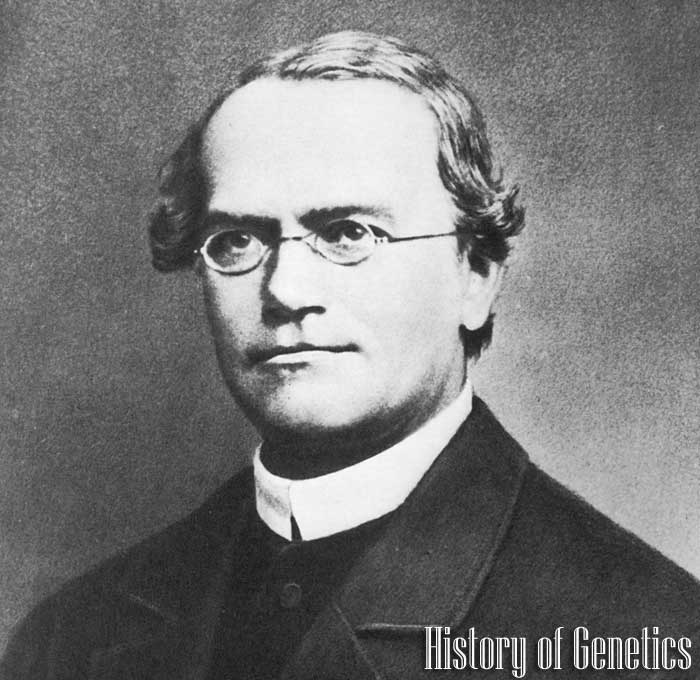
Genetics is the science of heredity and variation. On the one hand, heredity is the biological process of transferring genetic information and physical traits from parents to their offspring. The term heredity, which comes from the Latin word hereditatem, which means “condition of being an heir“, was first used in the 1530s. The gene is known to be the basic unit of heredity. In this page, we will explore the history of genetics and important events around the subject of genetics from the dawn of time to the contemporary researches.
History of Genetics Guide:
In deeper terms, it is a segment of the DNA that encodes for a specific protein. Genes are passed on from parent to child and are believed to be an important part of what decides looks and behavior. On the other hand, genetic variation is the difference in alleles and genes, both within and among populations. The primary sources of genetic variation are gene flow, mutation, and genetic shuffling[1].
History of Genetics
DURING THE 19TH CENTURY
-
1859:
Charles Darwin proposed his famous theory of evolution that described how organisms slowly change through time. Darwin also introduced the idea of natural selection, commonly termed the "survival of the fittest", in which organisms with favorable characteristics are most likely to survive and continue to reproduce[3].
Upon visiting Galapagos Islands, Darwin was able to gather evidence that will support his theory. Not long after, he published his book entitled On the Origin of Species by Means of Natural Selection, with his coauthor Alfred Russel Wallace.
Because Charles Darwin’s discoveries tend to contrast the religious view about the origin of life, he became the subject of critique by church officials and believers. -
1865:
Gregor Mendel, while experimenting on pea plants, have discovered how traits are passed from one generation to the next. He formed credible predictions coupled with statistical proofs about trait inheritance that he tested with dihybrid and trihybrid crosses in pea plants. The results of his experiments led him to postulate the three Laws of Principles of Inheritance. The first law of inheritance is known as the “law of dominance” wherein some characters tend to be dominant and be "expressed" while some are recessive and “suppressed”. The second law of inheritance is the “law of segregation,” which describes how parental factors separate the gametes (sex cells). Lastly, the third law of inheritance is the “law of independent assortment,” which describes how hereditary factors assort independently during the production of gametes.
These principles of inheritance formed the cornerstone of modern genetics, and because of them, Mendel was hailed as the "Father of Genetics".
But for some unknown reasons, the discoveries and works of Mendel went missing. -
1869:
Friedrich Miescher have successfully isolated the “nuclein” inside the nuclei of human white blood cells[4]. Not long after, he was able to prove that the “nuclein” is present in other cells as well.
-
1871:
The experiments of Ernst Haeckel proved that the genetic material is indeed located in the nucleus.
DURING THE 20TH CENTURY
-
1902:
Walter Sutton and Theodore Boveri postulated the Chromosomal theory (PDF) which describes that chromosomes carry the cell’s genetic material (gene).
-
1905:
Nettie Stevens observed the sex chromosomes X and Y[3].
In the same year, Thomas Morgan discovered the sex-linked inheritance of the white eye traits in fruit flies (Drosophila melanogaster – PDF). -
1905:
William Bateson coined the term “genetics” from the Greek word “genno” which means to “give birth” to describe the study of inheritance and variation [5].
-
1909:
Bateson published his book entitled Mendel's Principles of Heredity: A Defense. This book was the first English textbook on genetics and became the main popularizer of Mendel's ideas after their rediscovery.
-
1910:
A year after, together with Reginald Punnett, Bateson discovered the science of genetic linkage. They also coined the term “epistasis” to describe the interaction between two different traits[5]. Explore Punnett Square Calculator and Epistasis Calculator here.
-
1944:
The experiments of Oswald Avery and his colleagues proved that the DNA is the molecule responsible for inheritance. Check out this animation on his experiments here.
-
1953:
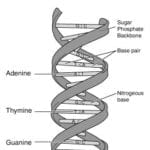 The three-dimensional and double helical model of the DNA was proposed by James Watson and Francis Crick (Pray 2009 6). Such discovery also paved the way for the formation of the basis of other fields like cell biology and biotechnology. In the same year, the process of DNA replication was discovered.
 -
1961:
Not long after, the genetic code was successfully “cracked”. It was discovered that DNA is made of only a single but specific triplet of DNA bases. These bases, when combined, shall then encode for specific corresponding amino acids.
Gene mutations, duplications, deletions, inversions, and translocations and other abnormalities in the chromosomes were discovered for the first time.
It was later discovered that genes can undergo natural selection and that the product of the expression of several genes can indeed form several traits[7]. -
1970:
Reverse transcriptase, an enzyme found in retroviruses, was discovered and was used in cloning genes.
-
1977:
Scientist Frederick Sanger introduced the process of sequencing the genome (set of genes of an organism) of a bacteriophage. Later, scientists have done it in other organisms as well.
-
1983:
Kary Mullis invented the process called Polymerase Chain Reaction. In this technique, a segment of the DNA is amplified until millions of copies are produced in just a short period of time[8].
-
1990:
In this year, the Human Genome Project was started. As its name suggests, the goal of this project was to sequence and map the genome (collections of all the genes) of man.
-
1996:
In this year, Ian Wilmut and Keith Campbell have successfully cloned Dolly the sheep. Dolly was the first mammal to be cloned from an adult cell.
-
2003:
The Human Genome Project was completed in 2003. The results of the project showed for the first time the complete genetic makeup for building a human being[8].
Top 12 Genetics News In 2017
Top 25 Most Recent Genetic Discoveries in 2018
Top 10 BEST Genetics Discoveries of 2019
Top 10 Genetics News of 2020

13 Important Genetic Engineering Pros And Cons

6 Major Disadvantages of Genetically Modified Foods
Top 15 Genetics News of 2021
Top 15 Genetics News of 2022
Cite this page
BioExplorer. (2026, August 26). History of Genetics. https://www.bioexplorer.net/history_of_biology/genetics/