
Red-Chested Mustached Tamarin
| Kingdom | Order | Family | Genus | Species |
|---|---|---|---|---|
| Animalia | Primates | Callitrichidae | Saguinus | Saguinus labiatus |

Red-bellied Tamarin Distribution
Countries
Brazil ( )
)
)
Peru ( )
)
)
Bolivia ( )
)
)Red-chested Mustached Tamarin Characteristics
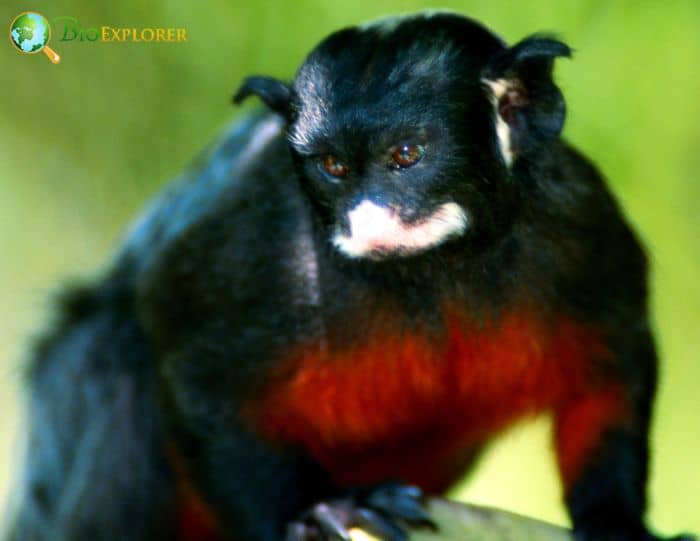
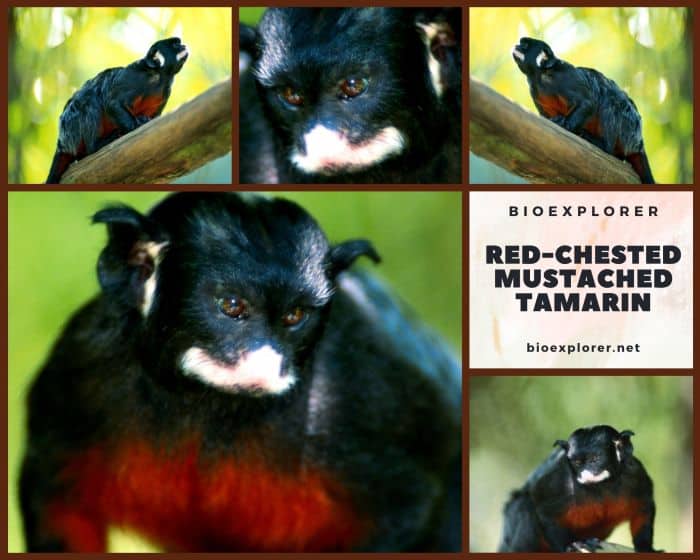
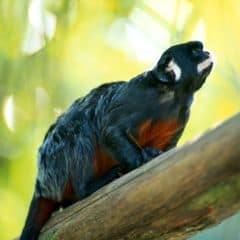
The Red-chested mustached tamarin[1] (Saguinus labiatus), also known as Red-bellied Tamarin, is a tamarin that lives in the Amazon region of Brazil, Peru, and Bolivia.
- Due to their appearance, Red-chested mustached tamarins are also known as white-lipped tamarins and red-bellied tamarins.
- They are usually dark brown or black and have distinctive red markings on their chest and abdomen.
- This Red-bellied Tamarin also has a patch of white fur that surrounds its nose and mouth, giving them the appearance of a mustache.
- Red-chested mustached tamarin is relatively small, measuring 23 to 29cm in length and weighing 350 to 575g.
- Females are generally slightly larger than males. Members of this species have claw-like nails on all toes except the big toe, and their hind legs are slightly longer than their front legs.
Red-Chested Mustached Tamarin Facts
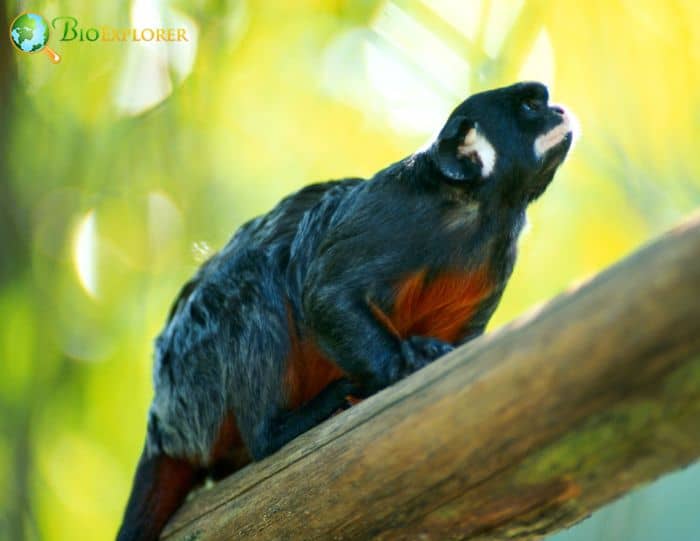
- The red belly of these New World Monkeys is their most striking external feature.
- Red-chested mustached tamarins are social, diurnal creatures that live in groups. Groups vary in size from 2-13 people, although groups usually consist of 4-6 members.
- The father carries most of the babies, but the siblings will also share the burden of the little ones and thus learn to be good caregivers.
- Females more often use scent marking when they are fertile. This scent mark is thought to attract breeding males or signal breeding susceptibility.
- Because they are small, Red-chested mustached tamarins are constantly on alert, often performing visual scans of their surroundings to ensure they are safe from potential predators.
Suggested Reading: Classification of Monkeys
Cite this page
BioExplorer. (2026, August 26). Red-Chested Mustached Tamarin. https://www.bioexplorer.net/animals/mammals/monkeys/red-chested-mustached-tamarin/