
Monkeys Starting with M
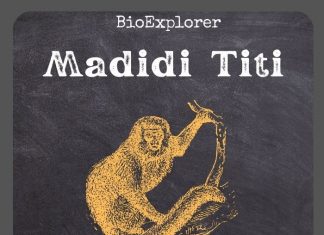
Madidi Titi
The Madidi titi also called the Golden Palace monkey, is a titi, a New World species of monkey discovered in 2004 in Madidi National Park in western Bolivia. The species got its name, Golden Palace, from an online casino after an auction.
Read more

Mantled Guereza
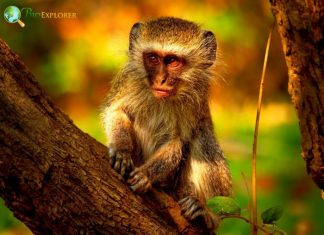
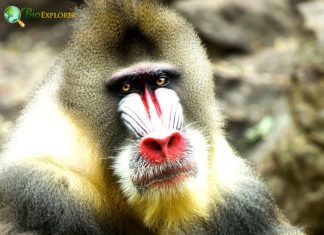
The mantled guereza (Colobus guereza), also known as the guereza, Abyssinian black-and-white colobus, or eastern black-and-white colobus, is a black-and-white colobus, a species of Old World monkey. The mantled guerezas are typically diurnal.
Read more
Mantled Howler Monkey
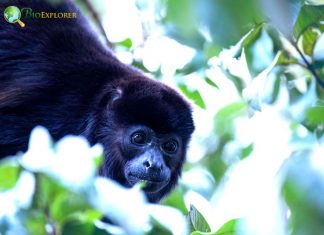
The Mantled howler monkey (Alouatta palliata) is a species of howler monkey, a New World monkey native to South and Central America. The species gets its name “mantled” from the long, protective hairs on its sides.
Read more
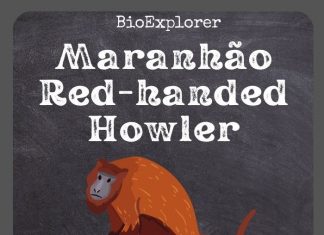
Maranhão Red-Handed Howler
The Maranhão red-handed howler (Alouatta ululata) is native to forests (e.g., Babaçu forests) in the northeastern Brazilian states of Piauí, Maranhão, and Ceará. Red-handed howler monkeys are among the least studied species of all howler monkeys.
Read more
Marca’s Marmoset
The Marca marmoset (Mico marcai) is a native endemic to the Amazon in the Aripuanã-Manicoré interfluvium of Brazil. Marca marmosets that submit to a dominant individual show this by baring their teeth and laying their ears flat.
Read more
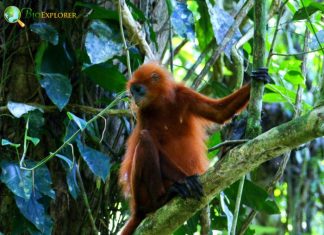
Maroon Langur
Endemic to the jungles of Borneo in Indonesia and Malaysia, red leaf monkeys get their name from their shaggy reddish-maroon fur. They are also known as maroon-leaf monkeys and maroon langurs.
Read more
Martins’ Tamarin
Martin’s tamarin (Saguinus martinsi) or Martin’s ochraceous bare-faced tamarin, is native to Brazil. These tamarins are distinguished from other New World monkeys by their small size and modified claws instead of nails on all digits except the big toe.
Read more
Maués Marmoset
The Maués marmoset (Mico mauesi) is a marmoset native to Brazil. It is only found on the western bank of the Maués Açu River in the state of Amazonas. Maués marmosets are arboreal and diurnal, spending most of their lives in trees.
Read more

Mentawai Langur
Mentawai Langur is also called the Long-Tailed Langur, and it is native to the Mentawai Islands in Indonesia. The pelage of Mentawai langur is medium length, longer on the back of the shoulders and anterior of the flanks and shorter on the face, neck, abdomen, and under the thighs.
Read more
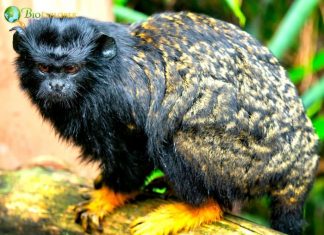
Midas Tamarin
The Midas tamarin (Saguinus midas), also called the red-handed tamarin or golden-handed tamarin is a New-World monkey in the Callitrichidae family. Midas tamarin is also known as golden tamarin or red-handed tamarin. This attests to the remarkably vivid colors of the feet and hands.
Read more

Miller’s Langur
Miller’s Langur (Presbytis canicrus), also called the Kutai Gray Langur, is the rarest of the four Hosei subspecies, all of which are native to the island of Borneo. One of the world’s most endangered primates, Miller’s langur, was once considered extinct until it was rediscovered in 2013.
Read more

Miller’s Saki
Miller’s Saki (Pithecia milleri), also called Miller’s monk saki, is a species of the saki family, a type of New World monkey. Miller’s sakis are diurnal and quadrupedal leapers. They usually move on all fours but can be seen swinging bipedally on large branches before leaping to another tree.
Read more

Milton’s Titi
Milton’s titi (Plecturocebus miltoni) also called the fire-tailed titi monkey, is a species of titi, a type of New World monkey from the Amazon rainforest of southern Brazil.
Read more

Miss Waldron’s Red Colobus
Miss Waldron’s red colobus (Piliocolobus waldronae) is endemic to West Africa. Miss Waldron’s red colobus was discovered in December 1933 by Willoughby P. Lowe, a collector at the British Museum (Natural History).
Read more

Mitered Langur
The mitered langur has brown or gray fur on its back, darker, while it is even darker on its belly and the arms, legs, and tail. These Indonesian primates live in groups of 1 male with 5 to 17 females.
Read more
Mittermeier’s Tapajós Saki
Mittermeier’s Tapajós Saki (Pithecia mittermeieri) is a disputed species of saki monkey, a type of New World monkey. Populations of this species were previously classified as Tapajós River saki (Pithecia irrorata). Still, a 2014 study described these populations as a separate species, Pithecia mittermeieri, based on their distinctive fur.
Read more
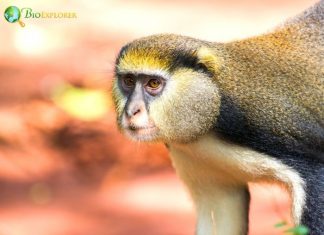
Mona Monkey
The Mona monkey (Cercopithecus mona) is an Old World monkey living between Cameroon and Ghana in West Africa. Mona monkeys live in large groups of 5 to 50 individuals.
Read more
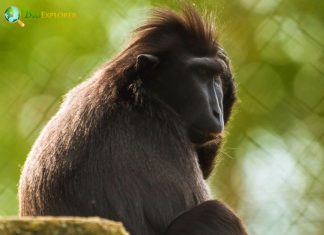
Moor Macaque
The moor macaque (Macaca maura) is a brown/black haired macaque with a pale rump and bare pink rump skin. Moor macaques appear to be a relatively tolerant macaque species, showing low levels of aggression between group members.
Read more
Mottle-faced Tamarin
The Mottle-faced tamarin (Saguinus inustus) is endemic to South America. The Mottle-Faced tamarin monkey gets its name from its mottled face, which means their faces have spots.
Read more
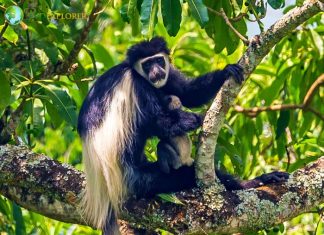
Mount Kilimanjaro Guereza
The Mount Kilimanjaro guereza (Colobus caudatus) is one of the 7 subspecies of the mantled guereza. It is found in Kenya and Tanzania in the forests surrounding Mount Meru and Mount Kilimanjaro.
Read more
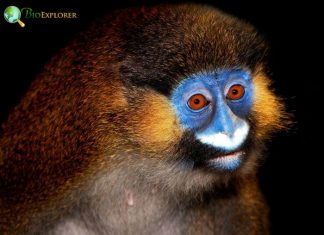
Moustached Guenon
The mustached monkey or moustached guenon (Cercopithecus cephus) is a primate species in the Cercopithecidae family. Moustached monkeys take regular paths through the branches, with each monkey following the next along the same path.
Read more
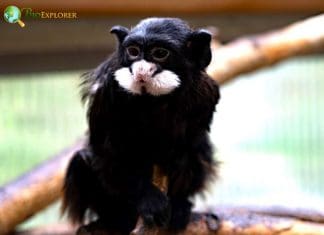
Moustached Tamarin
Moustached tamarins, also known as black-chested moustached tamarins and Spyx’s moustached tamarins, are native to Peru and Brazil. These monkeys are found in all strata of the lowland Amazon rainforest. The moustached tamarin gets its name from the lack of coloration in the facial hair around the mouth, which resembles a mustache.
Read more
Munduruku Marmoset
The Munduruku marmoset (Mico munduruku) is a marmoset native to Brazil. It is only found in the southern Amazon over an area of about 120,000 km square, from the right bank of the Jamanxim River below the mouth of the Novo River to the mouth of the Tapajós River.
Read more

Myanmar Snub-nosed Monkey
The Myanmar snub-nosed monkey or black snub-nosed monkey (Rhinopithecus strykeri) is an endangered Colobino monkey species discovered in northern Burma (Myanmar) in 2010. These Asian primates’ tails are relatively long, usually around 1.4 times their body length.
Read more
Cite this page
BioExplorer. (2026, August 26). Monkeys Starting with M. https://www.bioexplorer.net/animals/mammals/monkeys/m/