
Gelada
Primate Profile
Gelada Baboon
Theropithecus Theropithecus gelada
Kingdom
Animalia
Phylum
Chordata
Class
Mammalia
Order
Primates
Family
Cercopithecidae
Genus
Theropithecus
Species
gelada
Authority
(Rüppell, 1835)
Photo
LC
IUCN STATUSLeast Concern
- Common NameGelada Baboon
- Taxonomy Classification Year1835
- Monkey Size50 to 74 cm (19.69 to 29.13 in)
- Skin Color(s)Brown
- HabitatSavanna or grassland
- DietHerbivorous
- Native CountriesEthiopia
Gelada Baboon Distribution
Countries
Ethiopia ( )
)
)Gelada Characteristics
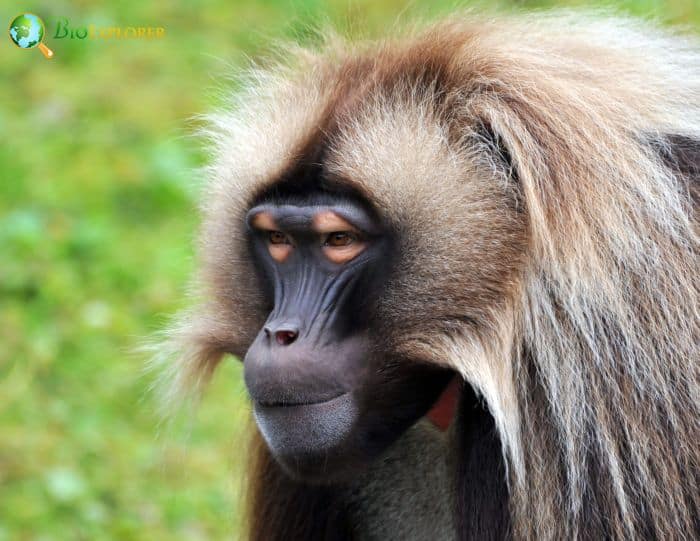
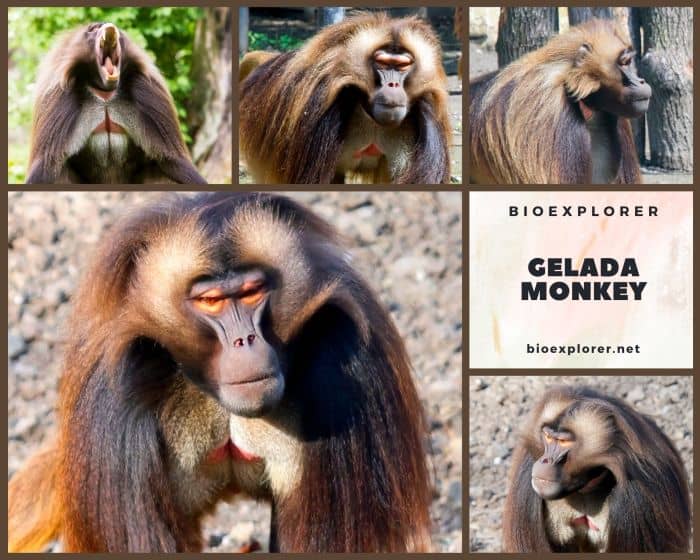
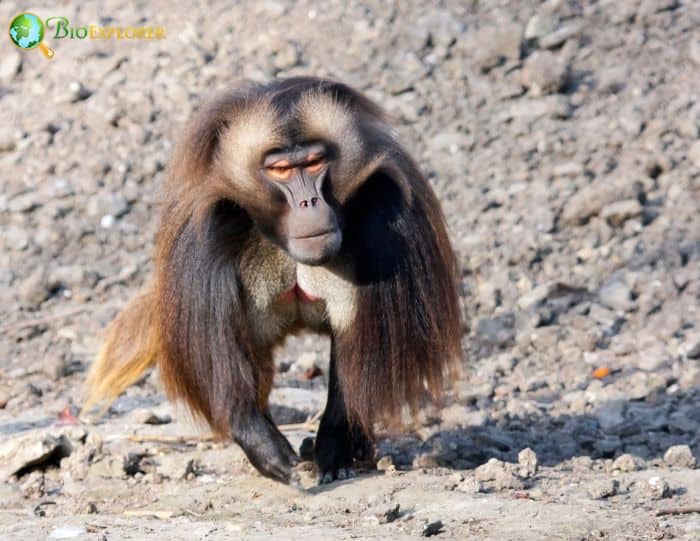
The gelada[1] often called the gelada baboon, or the bleeding-heart monkey, is an Old-World monkey found only in the Ethiopian highlandsand living at 1, 800 to 4, 400 meters (5, 900 to 14, 400 feet) above sea level.
- Male Gelada baboons weigh an average of 20.25 kg. Members of both sexes have short faces and wide nostrils.
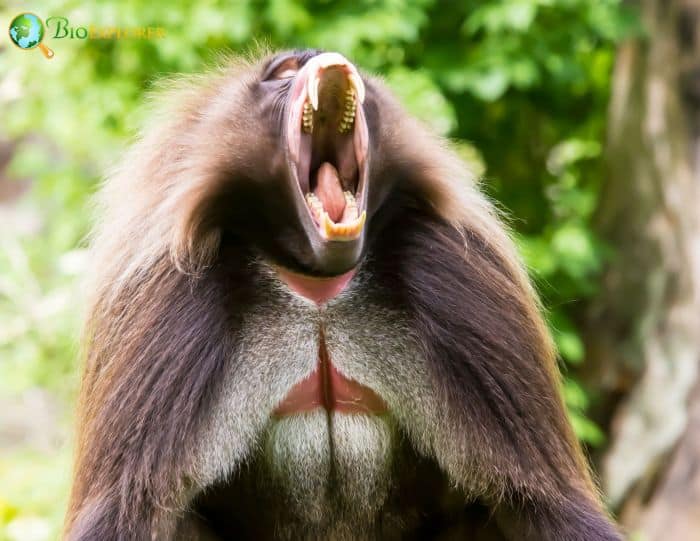
- They have short brown fur, and both males and females have a bare pectoral patch that is usually triangular and fringed with white hairs.
- The size and color of this spot depend on hormonal changes in women of both sexes. Both sexes have light eyelids that are used for expression.
- Males are characterized by the presence of whiskers and a hairy brown coat.
Gelada Facts
- Geladas aren’t territorial, and it is not unusual to find congregations of separate groups foraging together when conditions are favorable.
- They live in troops of one male with several females and their young. These groups are known as one male unit (OMUs).
- Geladas use visual cues like facial expressions and posture to communicate.
- Tactile communication between companions, foster partners, and mothers and their offspring can be essential in maintaining social bonds.
- There appears to be some chemical communication in this species, as males sometimes sniff the red breast patch of females in heat.
Suggested Reading: Species of Monkeys
Cite this page
BioExplorer. (2026, August 26). Gelada. https://www.bioexplorer.net/animals/mammals/monkeys/gelada/